

Does "Organic" Actually Matter for Your Skin?
You've seen "organic" stamped on skincare products everywhere. But here's what you're probably wondering: does it make a real difference, or is it just marketing?
The answer depends on how plants are grown, what ends up on your skin, and whether you care about the environmental picture. Most people know organic crops grow without synthetic pesticides and fertilizers. What catches them off guard is why that matters beyond the farm.
The gap between organic and conventional agriculture shows up in three places: the nutrient profile of what you're applying, your long-term chemical exposure, and the soil health future generations inherit.
How Organic Farming Works
Organic farming isn't about skipping pest management. It's about choosing different methods.
Instead of synthetic pesticides and fertilizers, organic farmers use manure and compost to feed soil, rotate crops and apply mulch to control weeds, and bring in beneficial insects to handle pests naturally. When done right, organic farms match conventional yields. The trade-off? Labour-intensive work instead of chemical shortcuts.
For your skin, this matters because it changes what's left on the plant when it's harvested.
The Pesticide Residue Problem
Conventional crops often retain pesticide residues even after washing. Research consistently finds residues in about one-third of conventional produce samples tested, with many exceeding established safety limits.
The real issue isn't concentration. It's cumulative exposure. Some pesticides bioaccumulate, building up in your body over time. Systematic reviews have found consistent links between chronic pesticide exposure and serious conditions: cancer, neurological disorders, respiratory problems, and endocrine disruption.
Think about skincare specifically. When you apply products daily, you're introducing these chemicals through your skin barrier over months and years. Each application contains small amounts, but the cumulative effect? We're still learning about that.
Why Organic Ingredients Pack More Punch
Here's what surprises most people: organic crops often contain significantly higher concentrations of compounds that actually benefit your skin.
Large-scale research comparing organic and conventional crops across hundreds of studies has found consistent patterns. Organic crops contained substantially higher levels of beneficial antioxidants; compounds like flavonols, anthocyanins, and flavanones that protect and nourish skin.
The research suggests switching to organic plant-based ingredients provides antioxidant benefits equivalent to adding extra servings of fruits and vegetables to your diet, without actually eating more.
What does this mean for your skin? If a formula contains blueberry extract or polyphenol-rich ingredients, the organic version has substantially more of the active compounds dermatologists care about. You're getting more of what you paid for.
The Environmental Impact
Beyond personal health, there's an environmental cost to conventional farming that affects everyone.
Pesticides don't stay where they're sprayed. Rain washes them into soil and groundwater. Research examining organic versus conventional farming practices has found organic methods produce measurably better environmental outcomes:
-
Significantly higher earthworm populations (a key indicator of soil health)
-
Lower nitrogen emissions (reducing water pollution)
-
Reduced nutrient runoff that creates dead zones in waterways
-
Lower overall energy use in farming operations
Pesticides that run off kill beneficial insects, accumulate in predators, and disrupt ecosystems. If you're making ethical choices as a consumer, organic farming addresses these concerns directly.
Are Organic Ingredients More Effective?
Yes, but context matters.
Higher antioxidant density makes a real difference. Antioxidants neutralize free radicals that age your skin, reduce inflammation, support barrier repair, and provide UV protection.
Research has also found organic crops contain substantially lower concentrations of toxic heavy metals like cadmium compared to conventional crops. Fewer contaminants plus higher active ingredients equals more effective skincare.
Let's be honest: organic won't fix every skin problem. But gram for gram, an organic aloe extract contains more of the compounds researchers associate with healing than conventional aloe. When you combine multiple organic ingredients in a thoughtful formula, this synergistic effect becomes noticeable.
Beyond Skin Benefits
There's also the production story, which matters if you care how your products are made.
Organic farming is labour-intensive by design. Organic farms typically commit to sustainable water practices, ecosystem protection, fair labour standards, and no animal testing. Products made with organic ingredients are more likely to be cruelty-free and suitable for vegetarian and vegan lifestyles.
If you care about how your skincare is made, not just what it does, organic certification tells that story.
How to Choose Organic Skincare
Certification matters. Look for COSMOS, ECOCERT, or ACO (Australian Certified Organic) labels. These verify farming practices and manufacturing standards. "Natural" or "plant-based" without certification doesn't guarantee organic methods were used.
Read ingredient lists carefully. Organic certifications require transparent disclosure. If a brand lists "fragrance" or "perfume" vaguely, that's a red flag. Organic standards demand specificity.
Price reflects reality. Organic skincare costs more because organic farming is labour-intensive. If a product claims organic ingredients but costs the same as conventional options, something's off.
Skin type still matters. Organic doesn't mean gentler. Some organic ingredients can sensitize certain skin types. Always patch test.
The Bottom Line
Organic skincare isn't a miracle cure.
But the evidence suggests it's a meaningful choice. You get fewer pesticide residues over time. You get higher concentrations of active compounds that work. You support farming practices that protect water and soil. You align purchases with values like compassion and sustainability.
If you're health-conscious about what you eat, the same logic applies to what you put on your skin. Research suggests skin absorbs a significant portion of what you apply. Over a lifetime of daily use, those choices add up.
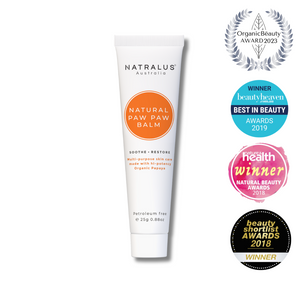
Natralus organic skincare products combine these benefits. They're formulated with high-grade, plant-based organic ingredients and created without cruelty. All products carry Australian Certified Organic certification (ACO #11016), with annual independent audits ensuring compliance. Ingredients like aloe vera, papaya, coconut, and blueberry (all organically grown) deliver measurable benefits because they contain higher levels of the compounds that actually work.
If you're ready to make the switch to skincare that matches your values while delivering real results, explore our organic range. It's designed with both your skin and your principles in mind.
Medical Disclaimer
This article is for educational purposes only and should not be considered medical advice. If you have specific skin concerns or conditions, consult with a qualified pharmacist or dermatologist before introducing new skincare products.
Sources
Żeber-Dzikowska, I., et al. (2025). "Health risk resulting from pesticide residues in food of plant origin." Annals of Agricultural and Environmental Medicine, 32(1). Study examining pesticide residue detection and MRL exceedances in conventional agricultural produce.
Shekhar, C., et al. (2024). "A systematic review of pesticide exposure, associated risks, and long-term human health impacts." Toxicology Reports, 13:101840. Systematic review documenting associations between chronic pesticide exposure and cancer, neurological disorders, respiratory issues, and endocrine disruption.
Barański, M., Srednicka-Tober, D., Volakakis, N., et al. (2014). "Higher antioxidant and lower cadmium concentrations and lower incidence of pesticide residues in organically grown crops: a systematic literature review and meta-analyses." British Journal of Nutrition, 112(5), 794-811. Meta-analysis of 343 studies comparing antioxidant levels and contaminant concentrations in organic versus conventional crops.
Organic Research Centre & Nature (2025). Meta-analysis of over 500 scientific publications examining environmental impacts of organic versus conventional farming practices. Documented findings on soil health indicators, emissions, water quality impacts, and energy efficiency.
[Authors]. (2024). "The Role of Organic Farming in Achieving Agricultural Sustainability: Environmental and Socio-economic Impacts." ResearchGate Publication 377215943. Peer-reviewed article examining environmental benefits of organic farming including soil health, biodiversity, reduced pollution, and socio-economic impacts including health benefits and sustainable livelihoods.